


Hedgey Finance is a unique onchain token distribution platform offering services to distribute tokens to teams, contributors, investors, and communities. Its custom dashboards simplify tracking, managing, and claiming tokens, catering to a range of needs like investor lockups and community token claims. Hedgey is notable in the DAO community, assisting major entities like Gitcoin, Gnosis, and Shapeshift in managing token tables efficiently.

Blockscout is an open-source blockchain explorer designed for Ethereum Virtual Machine (EVM)-based networks. It provides users with a comprehensive interface to search transactions, view account balances, verify and interact with smart contracts, and engage with decentralized applications across various Ethereum networks, including mainnets, testnets, sidechains, and Layer 2 solutions. Unlike centralized, closed-source explorers, Blockscout offers transparency and flexibility, supporting hundreds of chains and rollups within the broader blockchain ecosystem, such as Ethereum, Cosmos, Polkadot, Avalanche, and Near.

Elevate is a decentralized cross-chain bridge that facilitates rapid, secure, and cost-effective transfers of Ethereum-native assets across various Layer 1 and Layer 2 networks, as well as Ethereum Virtual Machine (EVM)-compatible chains.
Zora is a social network built onchain. It lets users create, collect, and share media as NFTs directly on its own blockchain. Zora runs on the OP Stack and is also a dApp on both OP Mainnet and Base. It’s optimized for cheap, fast interactions, focused on creators and communities.

Across is an interoperability protocol using an intents-based architecture to enable fast, low-cost, and secure cross-chain transactions. Unlike traditional message-passing solutions, Across relies on relayers to fulfill user-defined outcomes instantly, with a separate settlement layer ensuring secure and verifiable fund transfers.

Aave offers a decentralized, non-custodial liquidity protocol for lending, borrowing, and earning interest on crypto assets. Its community-driven governance process involves AAVE, stkAAVE, and aAAVE token holders in decision-making. Ideas are discussed in the Aave Governance Forum, polled on Snapshot, and, if supported, become Aave Improvement Proposals (AIPs). AAVE tokens, capped at 16 million, are used for governance and protocol security.

The Retro Funding: Dev Tooling program rewards open-source toolchain software that supports onchain application development on the Superchain, with a budget of up to 8M OP and monthly rewards from March to July 2025.

Retro Funding: Onchain Builders rewards projects driving cross-chain interoperability on OP Chains, with up to 8M OP
Base Batches 002 Demo Day brings together 50 emerging teams from the Base ecosystem for rapid-fire pitches to investors, partners, and builders. Join an afternoon of demos, networking, and a first look at the next wave of onchain projects.
A night of art, music, and culture with the Base team at Devconnect, featuring live performances and onchain creators from across LATAM. Join the community for an immersive evening celebrating creativity on Base in Buenos Aires.
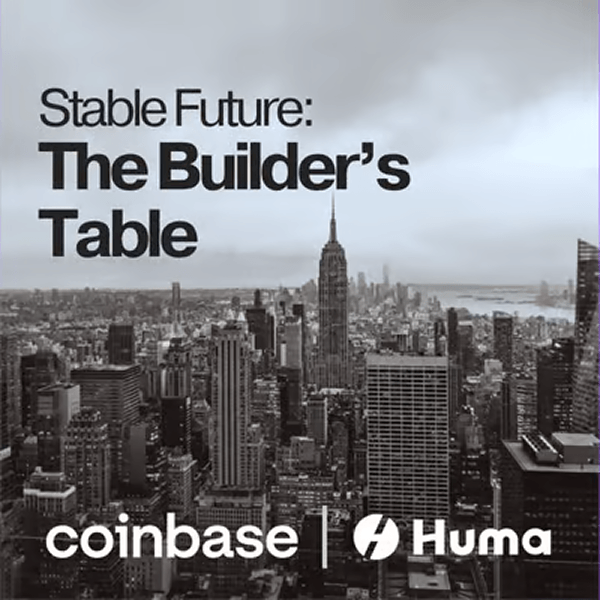
The Builders' Table by Coinbase & Huma is an intimate, invite-only dinner (30 seats, 2 Michelin stars) for leaders at the intersection of stablecoins, payments, and digital assets

Here's a short description for Battle Trade: DAS NYC: Battle Trade: DAS NYC is a winner-take-all live perps trading competition where 8 teams battle through 3 elimination rounds on Base and Avantis. NYC KOLs vs. TradFi traders, public leaderboard, cage-style carnage—highest PnL wins cash immediately.

Private brunch bringing together 50 pre-TGE founders with VCs, crypto-native funds, centralized exchanges, and infrastructure partners during EthCC.

A builder-focused breakfast hosted by Foundation Capital and Coinbase Ventures in Miami Beach. Connect with exceptional founders, builders, and investors over coffee and breakfast to share what you're building, exchange ideas, and explore potential opportunities.

OP Mainnet, previously known as Optimism, is a Layer 2 scaling solution built on top of Ethereum. It utilizes optimistic rollups to provide faster and cheaper transactions while maintaining the security of the Ethereum mainnet.

Ink is a Layer 2 blockchain built by Kraken powered by the OP Stack. It connects Kraken’s 10+ million users to decentralized finance (DeFi), offering easy access to DEXs, lending, and yield protocols. By joining the Superchain, Inkchain combines Ethereum’s security with Layer 2 scalability for a streamlined DeFi experience.

Unichain is an L2 purpose-built for DeFi, exclusively on the OP Stack. Unichain is part of the Superchain’s path to interoperability, and will support ERC20s that are Superchain interop compatible. Uniswap Labs is also working with Flashbots to develop a new TEE-based block builder that reduces Unichain confirmation times from 1 second to 250 milliseconds.

Soneium is a Layer 2 blockchain developed by Sony Block Solutions Labs, a joint venture between Sony Group and Startale. Designed to bridge Web2 and Web3, Soneium aims to create a versatile, developer-friendly ecosystem that empowers creativity and innovation. It provides a scalable, accessible platform for developers, creators, and communities, enabling them to build and deploy applications that blend entertainment, gaming, finance, and more.


%20(1).jpg)
